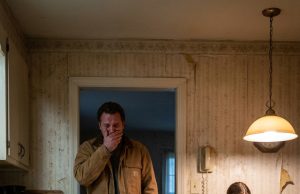
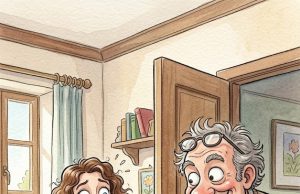
Evan Roth froze just inside the doorway of the therapy room, his body reacting before his thoughts could catch up.
His briefcase slipped from his fingers and struck the wall with a muted thud he barely noticed. The wheelchairs that usually lined the space stood empty by the window, pushed aside like forgotten objects. On the padded floor, his twin sons sat cross-legged, their fragile legs stretched out in front of them, while Rachel Monroe knelt nearby, her palms resting gently against their calves as she spoke in a calm, steady voice that felt unreal.
For several seconds, Evan couldn’t breathe. Panic surged through him—months of warnings, medical charts, and strict instructions crashing into a single image he had been taught to fear.
“What’s happening here?” he asked, though his voice came out tight and uneven.
Rachel looked up, surprised to see him, but she didn’t pull her hands away.
“They wanted to sit on the floor,” she said calmly. “Their backs were stiff. I thought a little stretching might help.”
“You had no authority to do this,” Evan said, stepping forward despite himself. His heart pounded as he motioned toward the empty chairs. “They are not supposed to be out of them. You know that.”
“They’re supposed to be comfortable,” Rachel replied, steady but gentle. “And they’re supposed to feel like children—not patients.”
The boys immediately sensed the tension. Aaron’s fingers curled into the mat as his small smile disappeared. Simon glanced between his father and Rachel, unsure which reaction was expected. The sight struck Evan harder than he anticipated.
“Put them back,” he said quietly. “Now.”
Rachel hesitated, studying his face, then nodded. She lifted Simon first, speaking softly as she settled him back into his chair. Aaron followed, gripping her sleeve with unexpected strength before finally releasing it. Neither boy reached for Evan, and the realization cut deeper than he was prepared for.
When she finished, Rachel stood.
“They laughed today,” she said softly. “That hasn’t happened in a long time.”
Evan had no response.
“You should leave,” he said after a moment, his voice hollow.
Rachel gave a small nod and walked out. The door closed behind her, the sound echoing through the room.
Evan knelt in front of his sons, trying to pull them close.
“It’s okay,” he whispered, though his voice cracked. Aaron turned away. Simon stared at his hands. Evan remained there far longer than he realized, weighed down by a choice he didn’t yet understand.
Eighteen months earlier, everything had collapsed in an instant. His wife had been driving the boys home from preschool—backpacks still smeared with finger paint—when a speeding truck ran a red light and struck the car. She died before help arrived. The boys survived, but severe spinal injuries left doctors speaking in cautious, measured phrases that offered no real hope.
Evan buried her under gray skies, promising to protect their children at any cost. He kept that promise the only way he knew how—by controlling everything. Specialists, equipment, rules. Safety turned into rigidity, and rigidity became a prison none of them knew how to leave.
Rachel Monroe arrived months later, hired to manage the house and bring warmth back into a home that had grown silent. She wasn’t a therapist. She never claimed to be. But she spoke to the boys as if they were still capable, still whole—and somehow, they responded.
That night, unable to sleep, Evan reviewed the security footage.
He watched Rachel sit on the floor with the twins, guiding their legs through slow movements while humming softly. He leaned closer when he noticed it—Aaron’s toes flexing, barely perceptible. He replayed it again and again, his breath catching each time.
Another clip showed Simon reaching for Rachel’s hand, his face lighting up with a smile Evan hadn’t seen since before the accident. He heard her voice, patient and certain.
“Trying isn’t pointless,” she said softly. “Trying is where things begin.”
Evan covered his face, the weight of his fear finally collapsing in on itself. He had stopped the one thing that brought his sons joy.
At dawn, he found Rachel asleep on the floor outside the boys’ room, wrapped in a blanket. She had stayed, even after being dismissed. Something inside him shifted.
“I was wrong,” he admitted later, his voice unsteady. “I should have listened.”
She met his eyes.
“They need you present,” she said. “Not just protective.”
Days later, new tests confirmed what the footage hinted at—faint but undeniable nerve activity. Dr. Anita Patel studied the scans twice before looking up in disbelief.
“Something is responding,” she said. “I can’t explain it yet, but it’s real.”
Not everyone accepted the change. Evan’s mother, Elaine Roth, arrived unannounced, concern quickly turning to suspicion when she learned what Rachel had been doing.
“This is reckless,” she snapped. “You’re letting hope cloud your judgment.”
Her certainty faltered when Simon, supported by Rachel’s hands, managed to stand for several shaking seconds.
He reached toward his grandmother, arms lifted with effort and intent. Elaine said nothing as tears filled her eyes, turning away before anyone could see them fall.
The next morning, Rachel was gone.
A note waited on the kitchen counter, thanking Evan for trusting her and urging him not to stop believing in the boys.
When Evan found Aaron and Simon crying quietly in the therapy room, the truth finally settled in.
“Where’s Miss Rachel?” Aaron asked, his voice trembling—but clear.
It was the first complete sentence he’d spoken in more than a year.